Reuse Plastic Waste

Veltkamp has been using recycled plastic for over 30 years

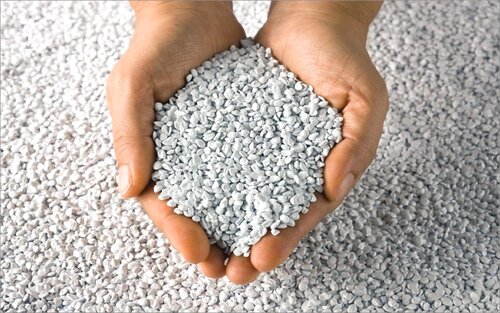
Veltkamp is a manufacturer of plastic products and has been using about 80% recycled granulate in its production processes for about 30 years.

The preferred materials here are bottle caps, click bins and especially car bumpers.

Nowadays, however, everyone wants products made from recycled material, in order to present themselves as environmentally friendly.

As a result, in the EU, consumption has increased dramatically, availability has decreased sharply and prices have risen sharply.

Plastic is not only inexpensive, safe, lightweight and can be used for a huge number of applications, but it is also extremely recyclable and environmentally friendly.

Of course, waste disposal is of great importance here, as for so many materials. Problems arise from litter and from dumping waste into open water and seas, as is still done in many southern countries.


Availability

Obviously, it is very important that there is also a constant supply of this recyclate. In practice, this is not always the case. Shiploads of recyclate are regularly sold en route to a European port and sailed off to China, among other countries.

The availability of suitable recyclate in a constant flow is therefore increasingly limited.
Veltkamp ISO 14001 – Environmental Management

Veltkamp is ISO 14001 certified. This is the international standard for an environmental management system based on an appropriate environmental policy.

Veltkamp uses engineering plastics for the production of plastic products. Additionally, the majority of the material used is recycled plastic waste, or recyclate.


Why Recyclate?

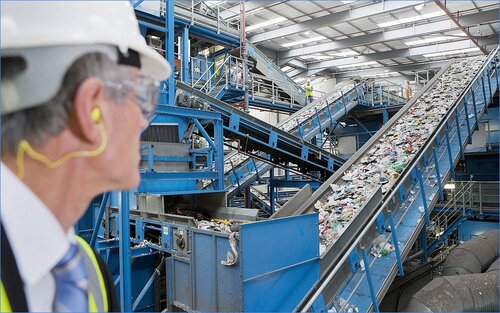
Recyclate is made from household, industrial, and ocean plastic waste. Examples include old bottle caps, household waste bins, diaper plastic, car bumpers, etc. Availability depends on the quality of waste collection in a country.

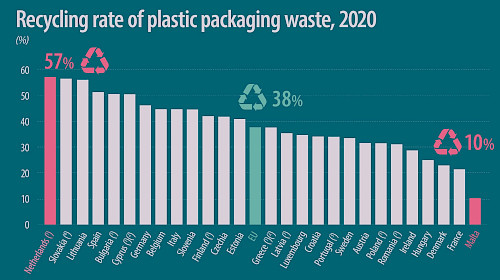
Western European countries, including the Netherlands, primarily use recycling and composting for this waste. Additionally, a portion is incinerated for district heating or electricity generation. In Southern and Eastern Europe, on the other hand, the majority of the waste is landfilled. Only a very limited portion is incinerated or processed in other ways.

recycling rate of plastic packaging waste eu

Price

The price depends primarily on availability. It also depends on the increasing demand on the global market for environmentally friendly production. As a result, recycled material is sometimes even more expensive than new material.

Therefore, contrary to all advertisements, it is not always easy to produce more environmentally friendly products using recycled material. It even happens that products are promoted as environmentally friendly, but due to a lack of availability and the price effect, a mix of new material and recycled material is used.

Veltkamp ISO 14001 – Environmental Management

Veltkamp is ISO 14001 certified. This is the international standard for an environmental management system based on an appropriate environmental policy. Veltkamp uses engineering plastics for the production of plastic products.

In addition, recycled plastic waste, or recyclate, is used for the most part.

So what about bioplastics?

Bioplastics are artificial polymers made from PLA (Polylactic acid). PLA is produced from starch using a chemical process. However, this does not mean that the plastic itself is biological, and therefore, it does not mean that the plastic is biodegradable. These bioplastics are compostable under certain industrial conditions. However, this requires high energy consumption to break down the molecular chains.

The percentage of added filler can vary significantly, and this often has an adverse effect on the mechanical properties of the plastic. Some fillers should also not be left outside or in a damp environment for too long. For example, with wood, the weight increases disproportionately.

Furthermore, developments are underway in which fillers are added to both synthetic and bioplastics. A disadvantage here is the CO2 emissions resulting from the transport movements of the filler and the plastics to the mixing location. There, the plastics are melted again and subsequently granulated. This not only consumes a lot of energy, but the substances can also no longer be decomposed. At the end of their life cycle, these plastics can only be incinerated in their entirety. This is in contrast to pure plastic, which can be recycled.

Bioplastics are intended to replace disposable packaging. However, the material is not biodegradable in nature but must be processed in special composting facilities. Plastics remain plastics and do not belong in nature. Plastics that eventually break down form microplastics that can no longer be removed from nature using current techniques. Bioplastics are also considerably more expensive. As a result, the final production costs are currently still too high for many consumers.

Reuse Plastic Waste

CO2 Footprint of Biobased Plastics

The European Commission has determined that bioplastics are important in limiting climate change, partly due to their lower CO2 footprint. A larger share of bio-based products could complement recyclates and thus also contribute to reducing greenhouse gas emissions.

Bioplastics have a CO2 footprint that can be 50 to 80% smaller than that of virgin plastics. With recyclate, the footprint is virtually zero.

Plastic Pact Europe

In 2019, the Plastic Pact was agreed upon between the European government and the business community to transition to plastics made from sustainably produced bio-based raw materials.

Not to solve the plastic soup problem, but to reduce dependence on fossil fuels and thus contribute to climate goals.

However, a major problem for waste processors is that bioplastics complicate the recycling of conventional plastics. In practice, consumers supply a mix of all types of plastics, including both standard plastics and bioplastics. This disrupts the composting process.

Many composters therefore remove as much plastic as possible, including plastics that break down.

plastic recycling

Conclusions:

  • the plastic soup in the oceans is the direct result of dumping waste into rivers and oceans, especially by southern and Asian countries
  • waste collection is reasonably well organized in Western Europe, and the environmental impact therefore actually relates to litter
  • bioplastics are expensive, difficult to separate, still in limited supply, and satisfactory for some packaging applications, but hardly suitable for more technical applications
  • bioplastics pose an increased risk of microplastics in the environment
  • for Veltkamp, ​​processing recyclate is therefore the most environmentally friendly method to date